
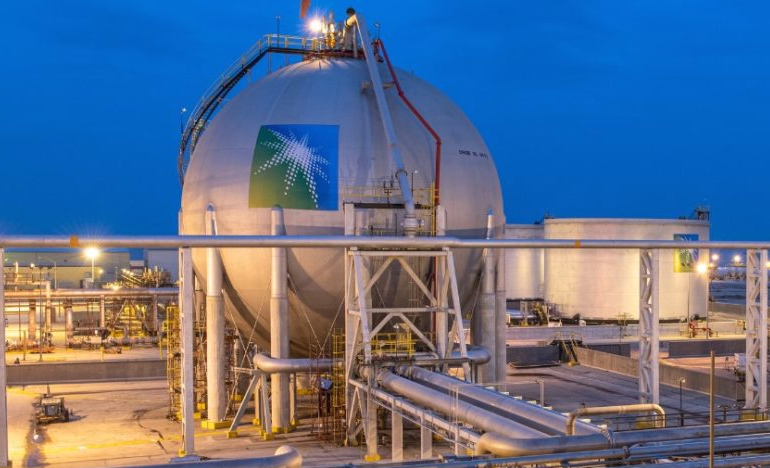
With no end in sight to the Hormuz shipping crisis, governments and corporates across the Middle East and beyond are accelerating a fundamental redrawing of global trade corridors, as the International Energy Agency warns the disruption has already surpassed the oil shocks of the 1970s in scale.
The latest move came on Tuesday, when AD Ports Group and Abu Dhabi petrochemicals giant Borouge signed a partnership agreement to explore establishing an alternative international export hub on the UAE’s east coast, using AD Ports’ Fujairah Terminals and eastern port facilities as the anchor.
Borouge is AD Ports’ largest exporter and the two companies have worked together since 2001. The new agreement goes further, with both parties committing to assess dedicated polyolefins infrastructure on the east coast and to engage jointly with shipping companies to develop new routes via Fujairah that reduce reliance on constrained maritime passages through Hormuz.
“We are building a more flexible and diversified network that enhances reliability, ensures continuity of supply, and reinforces our position as a trusted global supplier,” said Borouge chief executive Hazeem Sultan Al Suwaidi.
Fujairah sits outside the strait on the Gulf of Oman, making it the UAE’s most strategically important port in the current environment. But the facility has not been immune to the conflict – drone attacks have disrupted oil loadings there since the war began in late February.
The UAE is pressing ahead regardless. Abu Dhabi Crown Prince Sheikh Khaled bin Mohamed bin Zayed last week announced the acceleration of a new West-East Pipeline project, which will double export capacity through Fujairah. The pipeline is targeted for completion in 2027. ADNOC already operates the 360 km Abu Dhabi Crude Oil Pipeline from Habshan to Fujairah, with capacity of around 1.5 to 1.8m barrels per day.
Saudi Arabia’s East-West pipeline, running 1,200 km from Abqaiq to the Red Sea port of Yanbu, offers an estimated 4.5m barrels per day of effective export capacity. Aramco chief executive Amin Nasser has called it a “critical lifeline.” Together, the two Gulf pipelines fall well short of the roughly 20m barrels that transited Hormuz each day before the war.
Iraq is moving to reopen its long-dormant Kirkuk-Ceyhan pipeline to Turkey’s Mediterranean port of Ceyhan, initially at 170,000 barrels per day with plans to reach 250,000. Baghdad is also revisiting shelved proposals for pipelines to Oman’s port of Duqm, Jordan’s Red Sea port of Aqaba, and onward to Egypt – projects previously abandoned due to cost, conflict and political complexity.
Iran’s own Goreh-Jask pipeline, which could theoretically allow Tehran to bypass the strait it has blockaded, remains effectively non-operational. A test load was exported from Jask in late 2024 but no further shipments have followed, and the IEA said in February the terminal is not considered a viable crude export option.
More ambitious concepts are also circulating. A canal through the Hajar Mountains to Fujairah – a Gulf equivalent of Suez or Panama – has been discussed, though analysts describe the engineering challenges as extreme and the cost potentially running to hundreds of billions of dollars.
The redrawing of corridors is not confined to the Gulf. China, which relied on Hormuz for a significant portion of its energy imports, is accelerating investment in the Trans-Caspian International Transport Route, also known as the Middle Corridor, connecting China to Europe via Kazakhstan and the Caspian Sea. Road transport now accounts for more than 50% of China’s trade with Central Asia, up from less than 20% a few years ago. Bilateral trade between China and Kazakhstan hit a record $48.7bn in 2025, up 11% year-on-year.
The Baku-Tbilisi-Kars railway, a key artery on the Middle Corridor, has seen its annual capacity upgraded from 1m to 5m tonnes following modernisation completed in early 2024, with long-term targets of up to 50m tonnes by the mid-2030s.
Analysts describe what is underway as a structural shift in the Middle East’s logistics architecture, away from dependence on the Persian Gulf’s established but vulnerable infrastructure and toward a new trade geography with multiple nodes linking the Indian Ocean to the Mediterranean.

Leave feedback about this