

Maritime war spread far and wide in the Black Sea and the Middle East this week, attacks increasing both in number and geographical scope.
This week’s Maritime CEO interview was Bing Hou, who after four decades at sea and ashore, has developed ShipGod AI, which he described as an offline-first workspace giving each vessel its own digital environment and AI assistant. “The turning point for me was watching how much time good officers spend managing documents instead of being officers, and how much of what they know is never captured for the next crew,” Hou said.
Over at Splash Ports, this week’s CEO interview was with Beth Branch, president and chief executive of the Port New Orleans. “We cannot predict every geopolitical development, but we can build capacity, strengthen partnerships and give customers more flexibility,” she told the new, fast-growing ports title.
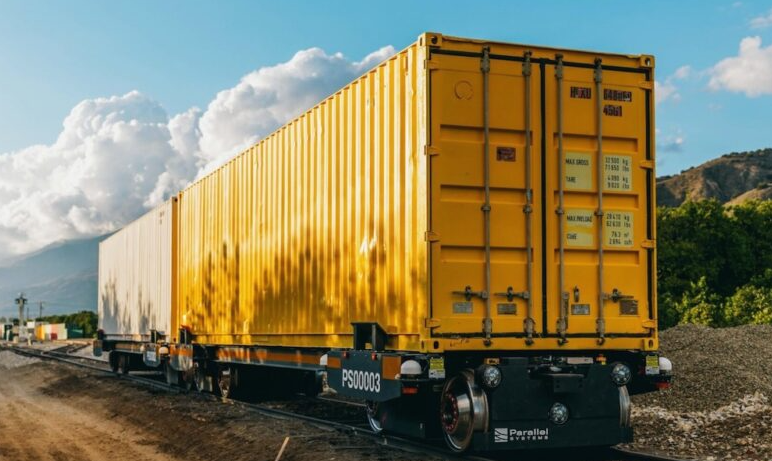
Also of interest in this week’s ports coverage, while driverless trucks are becoming a common sight at terminals around the world, there’s also a growing band of pioneers developing autonomous freight trains to move containers beyond a port’s perimeter, something Splash Ports took an in-depth look into yesterday.
Meanwhile, SplashTech’s lead feature this week tried to identify how to tell whether seafarers genuinely value the systems being introduced onboard. “If six months after introducing your platform the crew still maintains the same spreadsheet beside it, you haven’t really digitised anything. You’ve given them another system to update,” quipped Aristos Philis, chief executive of KeelX.
And in big tech news for the container sector, HD Hyundai has just delivered what it says is the world’s first containership designed to eliminate manual lashing. The 13,000 teu vessel, which is methanol dual-fuelled, has been handed over to France’s CMA CGM after being built using HD Hyundai’s proprietary hybrid lashing-free system.HD Hyundai’s new arrangement extends cell guides above deck, allowing containers to be held in place without traditional lashing. The breakthrough centres on what HD Hyundai calls a portable bench, a standardised structure fitted between cell guides. The unit is the same size as a 40 ft container, meaning terminal cranes can handle it as part of normal cargo operations. Containers positioned outside the cell guides are secured directly to the hull using a newly developed twist-lock routing system.
Finally, turning to our audible offering, shipping is attempting to work out what the future holds via so-called backcasting – this week’s Splash Wrap podcast explains more.
Related Ads
Leave feedback about this
You must be logged in to post a review.